Signature dishes
Crepes are thin buckwheat or wheat pancakes folded around sweet or savory fillings like ham, cheese, and spinach. Boeuf bourguignon is beef slow-braised in red wine with mushrooms, onions, and carrots until tender. Macarons are delicate almond-meringue shells with flavored cream centers in pistachio, raspberry, or lemon. Fresh oysters from coastal waters are served raw on ice with lemon. France produces hundreds of cheeses such as brie, camembert, and Roquefort, each with distinct textures and aging.
Where to eat it
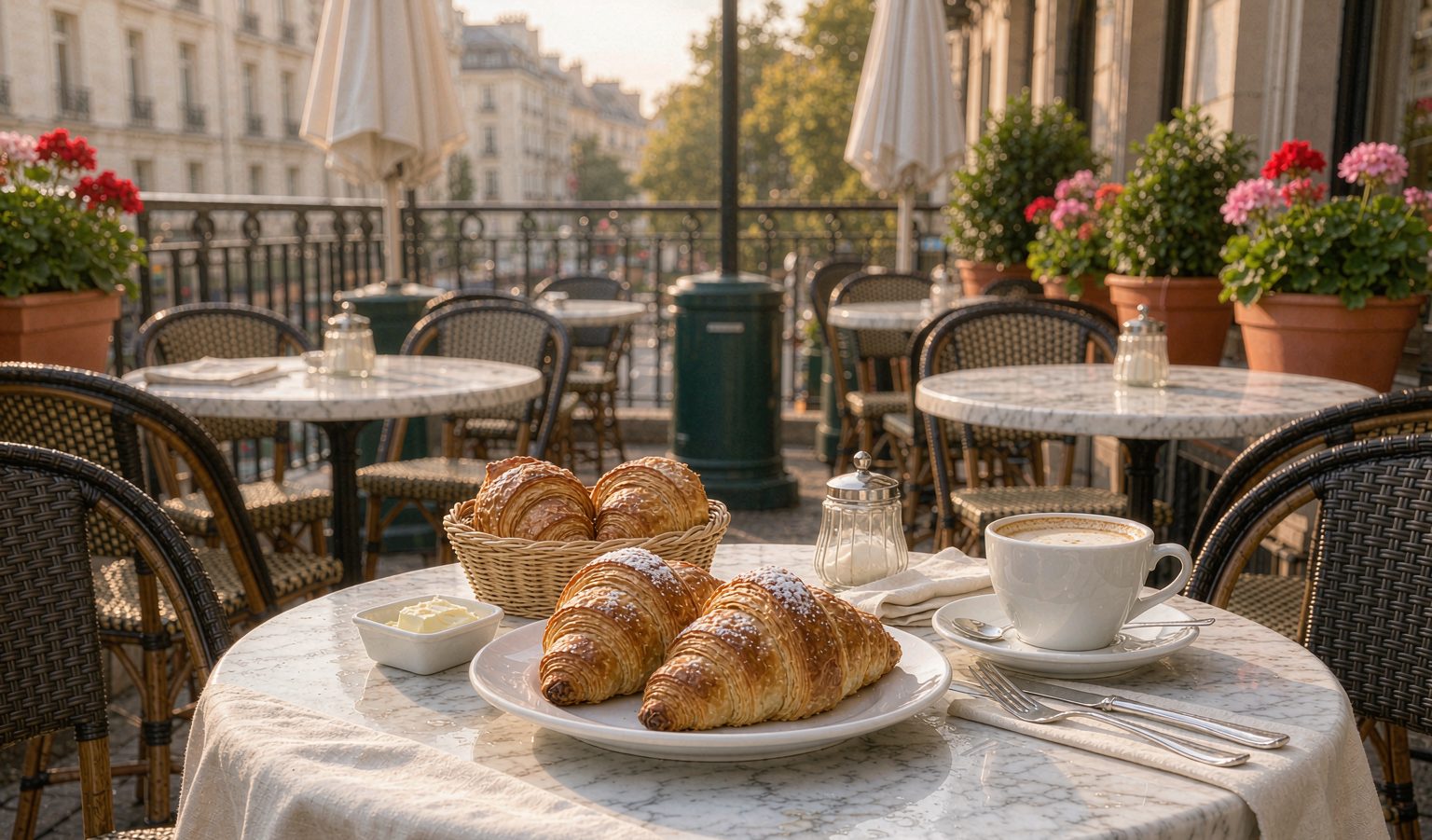
Parisian bistros serve hearty daily menus with soup, meat, and cheese at modest prices. Bakeries, called boulangeries, sell fresh baguettes, croissants, and quiches throughout the day. Brasseries offer relaxed all-day dining with seafood platters and steaks. Open-air markets display produce, charcuterie, and live poultry from local farms. Regional restaurants highlight local recipes, while casual cafes provide coffee and simple lunches on terraces.
Drinks & pairings
Bordeaux and Burgundy produce structured red wines that pair with roasted meats and game. The Loire Valley makes crisp white wines suited to seafood and goat cheese. Champagne accompanies celebrations and oysters. Rose from Provence refreshes in summer with salads. French cider from Normandy complements rich pork dishes. Strong coffee finishes meals, and herbal digestifs like pastis or calvados aid digestion after heavy courses.
Etiquette & tips
Service is usually included, so tipping is optional but small rounding is appreciated. Bread is placed on the table, not on a plate, and eaten with fingers. Meals run late; lunch starts near noon and dinner after seven. Greet staff with bonjour on arrival. Keep both hands visible above the table. Wait for the host to begin eating before lifting utensils.