City overview & best season
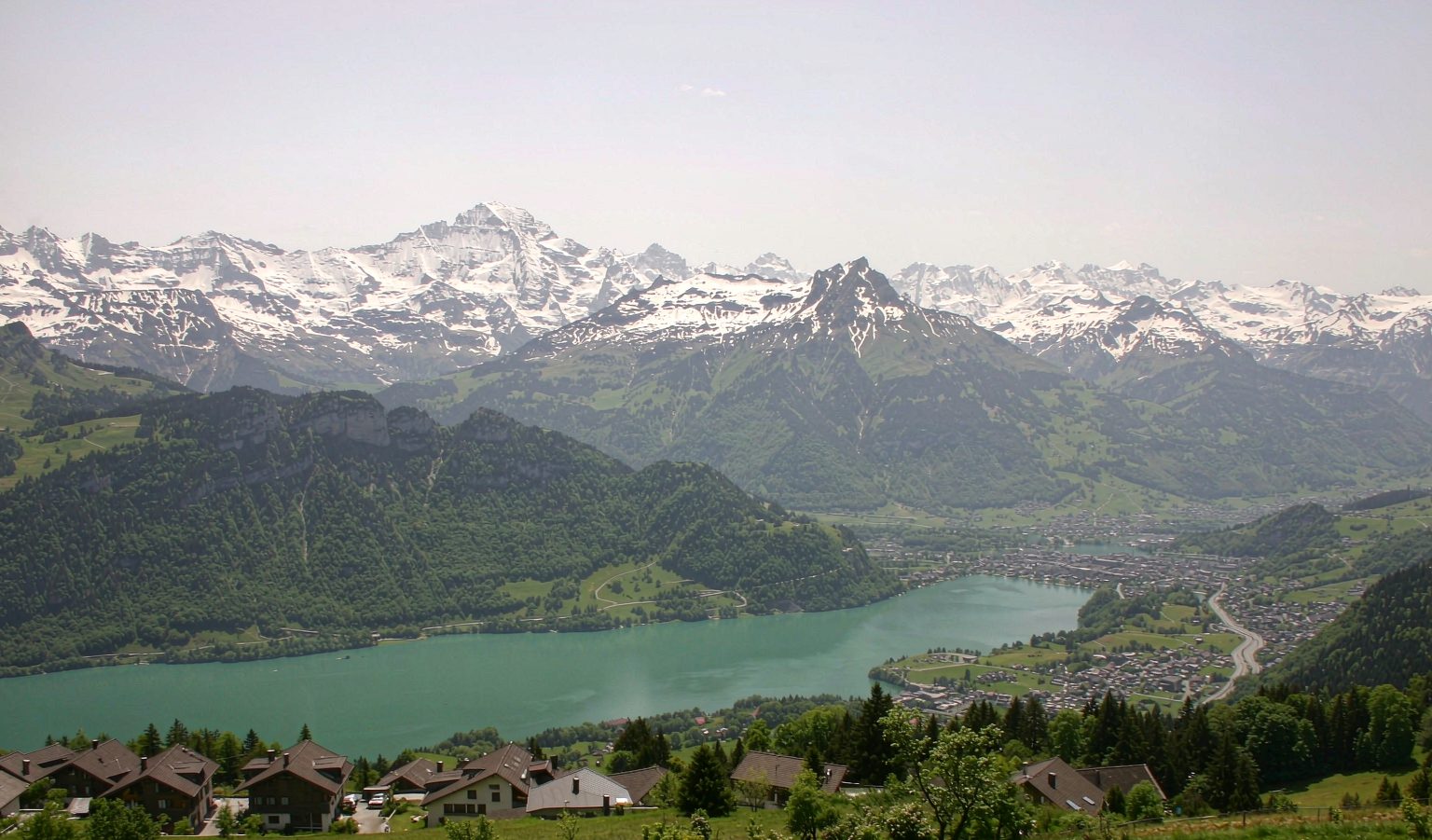
Interlaken lies on a flat strip of land between two lakes, framed by the Eiger, Monch, and Jungfrau peaks. Summer (June-September) is prime for hiking, paragliding, and boat trips. Winter draws skiers to nearby resorts. Spring and autumn are quieter with striking light. The town itself is modest; the draw is the surrounding mountains. Use it as a transit hub and day-trip base rather than a destination for nightlife or museums.
Must-see sights
Ride the cogwheel train to Jungfraujoch, the high-altitude saddle called the Top of Europe, for glacier views. Take a boat on Lake Thun or Lake Brienz, stopping at lakeside villages. The Harder Kulm funicular gives a classic twin-lake panorama. Visit the Trummelbach waterfalls carved inside a mountain. Stroll Interlaken's Hohematte park with its paragliding landing field. Nearby Lauterbrunnen valley holds dozens of waterfalls worth a day.
Neighborhoods to explore
Interlaken Ost (east) clusters around the main rail hub, with hostels, sports shops, and the funicular base. Interlaken West is calmer, with the casino and riverside walks. The Hohematte green space separates the two and hosts markets. For scenery, base in nearby villages like Lauterbrunnen, Grindelwald, or Murren instead. The lake promenades and the Aare riverside paths offer easy strolls between the two town centers.
Local food: what to eat & where
Eat raclette or fondue at a mountain restaurant after a hike. Try rosti and alpine macaroni at a casual village eatery, and sample air-dried beef with rye bread from a deli. Bakeries sell nut-filled braids and fruit tarts. A chocolate shop offers truffles. Look for rösti topped with cheese and egg at lunch counters. Pair with hot chocolate or glühwein in colder months; many spots favor hearty, warming alpine fare.
Where to stay
Interlaken itself suits budget and adventure travelers wanting transit access and gear shops. Interlaken Ost is best for train connections and hostels; West is quieter. For scenery, stay in car-free Murren or Grindelwald within the peaks, ideal for hikers and skiers. Families like the lake villages of Thun or Brienz. Book early in summer and winter, and consider a guest card that discounts local transport and activities.
Getting around
Interlaken Ost and West stations link trains to the Jungfrau region, boats to both lakes, and buses around town. The regional pass covers trains, boats, and cable cars for several days. Boats on Lake Thun and Brienz are scenic and functional. Bikes and e-bikes rent easily for flat riverside paths. Most central sights are walkable. Check timetables, as mountain trains run less often in low season and weather can halt cable cars.
Avoid these mistakes
Don't visit in poor weather and expect mountain views; peaks hide in cloud, so build flexible days. Avoid assuming Interlaken is lively at night; it winds down early. Don't buy separate tickets for every ride; a regional pass saves heavily. Avoid packing too much into one day with slow mountain trains. Don't forget layers and rain gear. Don't skip travel insurance for adventure sports like paragliding or canyoning.